Nothing launched two phones on the same day in March 2026, priced £349 and £499 respectively. The Nothing Phone (4a) starts at £349 for 8GB/128GB and tops out at £399 for 12GB/256GB. The Nothing Phone (4a) Pro starts at £499 for 8GB/128GB and reaches £549 for 12GB/256GB. Both are available now at Currys and nothing. Tech UK. The question for most UK buyers is simple: does the £150 jump to the Pro actually get you enough extra phone?
At a Glance — Key Differences
| Spec | Phone (4a) | Phone (4a) Pro |
|---|---|---|
| UK Price | £349–£399 | £499–£549 |
| Display | 6.78″ 120Hz AMOLED 1.5K | 6.83″ 144Hz AMOLED 1.5K |
| Chipset | Snapdragon 7s Gen 4 | Snapdragon 7 Gen 4 |
| Rear cameras | 50MP main + ultrawide | 50MP main + 50MP periscope + ultrawide |
| Telephoto | 3.5x optical / 70x digital | 3.5x optical / 140x digital |
| Build | Transparent rear / plastic | Metal unibody aluminium |
| Glyph | Glyph Bar (63 LEDs) | Glyph Matrix (137 LEDs) |
| Water resistance | IP64 | IP68 |
| Available colours | Black, White, Blue, Pink | Black, White, Pink |
| Where to buy | Currys, nothing.tech UK | Currys, nothing.tech UK, Amazon UK |
Both phones share the same 5,080mAh battery with 50W wired charging, Android 16 with Nothing OS 4.1, 3 years of Android OS updates, and 6 years of security patches.
Design and Display
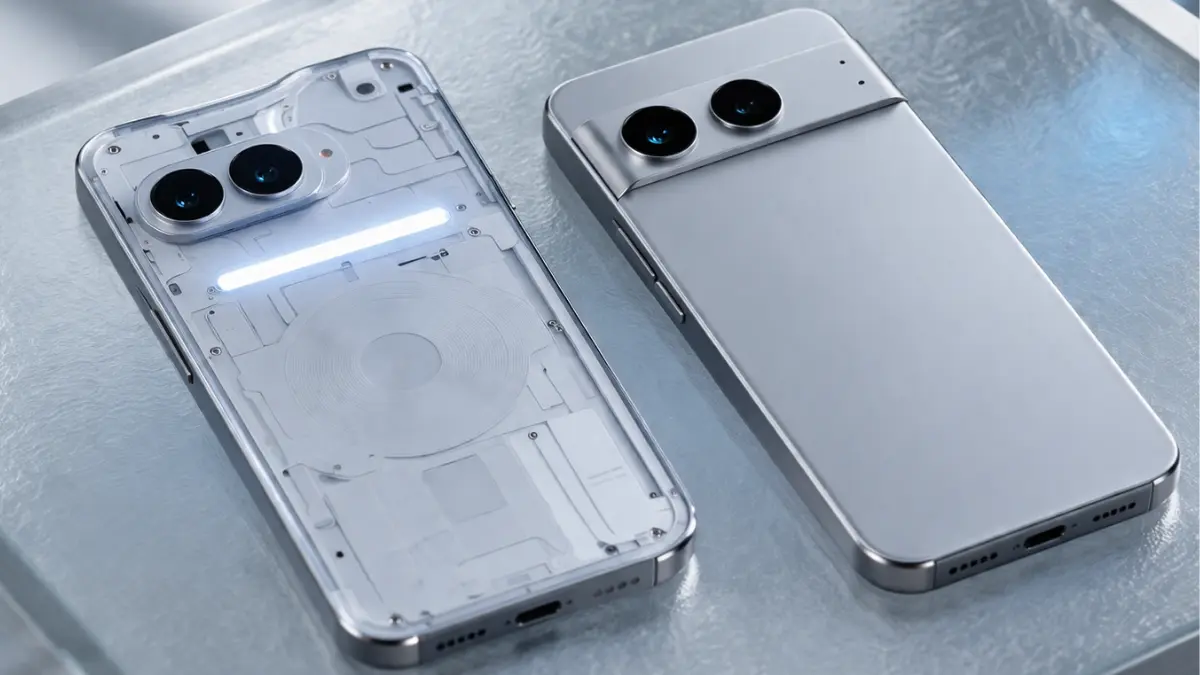
The (4a) keeps Nothing’s signature translucent back — you can see the internal components through the rear panel. It comes in four colours including the new tinted blue and pink variants. The build is plastic, which is standard at this price point, and it carries IP64 dust and splash resistance — fine for everyday use, less suitable for a soaking.
The (4a) Pro is a different proposition entirely. Nothing switched to a metal unibody aluminium chassis — the same premium material found in phones costing three times as much. IP68 certification means full waterproofing to 1.5m. The back panel is mostly opaque, with transparency reserved for the camera bar only, giving it a more premium, if less distinctively “Nothing” look. The Glyph Matrix replaces the simpler Glyph Bar — 137 individually controllable LEDs versus 63, with support for Glyph Toys and more complex notification patterns.
Display differences are narrower than the spec sheet suggests. The (4a) has a 6.78-inch 120Hz 1.5K AMOLED; the Pro has a 6.83-inch 144Hz 1.5K AMOLED. In daily use, 24Hz extra refresh rate is essentially imperceptible to most people. Both panels use Gorilla Glass 7i and hit strong peak brightness figures.
Performance
The chipset gap is the most commercially significant difference. The (4a) runs a Snapdragon 7s Gen 4 — a capable mid-range chip that handles daily tasks, streaming, social media, and casual gaming without issue. The (4a) Pro uses the Snapdragon 7 Gen 4 — Nothing says the CPU and GPU are both around 30% faster, based on its own testing. That gap matters if you’re editing video, playing demanding games, or running intensive AI-powered camera features at speed.
For most everyday UK users, the (4a)’s 7s Gen 4 is more than sufficient. The 7 Gen 4 in the Pro starts to earn its premium for power users and mobile photographers who want faster processing in the camera pipeline.
Both ship with 8GB or 12GB of RAM depending on storage tier. Nothing OS 4.1 runs cleanly on both — no bloatware, no aggressive battery management, no intrusive ads. That software experience is a genuine differentiator against similarly priced Android alternatives.
Camera
Both phones carry 50MP main sensors. The (4a)’s camera system covers main and ultrawide — two lenses total. The (4a) Pro adds a 50MP periscope telephoto with 3.5x optical zoom stretching to 140x digital hybrid zoom, compared to the (4a)’s 70x digital ceiling. It also gains 4K Ultra XDR video with Dolby Vision support and AI Eraser for object removal in the gallery app.
For casual photography — social media, travel, portraits, and everyday moments — the (4a) takes excellent shots and the absence of telephoto won’t register. For travel photographers, anyone who shoots at distance, or anyone who shoots video seriously, the Pro’s periscope telephoto and cinema-grade video specs represent a meaningful upgrade.
UK Price and Value
At £349, the Nothing Phone (4a) is the most competitively priced mid-range Android available in the UK right now. The iPhone 17e starts at £599 — £250 more for a single-rear-camera phone with a smaller screen. The Samsung Galaxy S26 starts at £879 — more than twice the price. Nothing is pricing aggressively and it shows.
At £499, the (4a) Pro competes in a more contested space. The Pixel 10a is expected at a similar price point. But the Pro’s metal build, IP68, periscope camera, and 144Hz display make a strong case for the money — particularly for buyers stepping up from a budget phone who want a device that feels genuinely premium without paying flagship prices.
Check the latest UK prices on the Nothing Phone (4a) and (4a) Pro at Amazon UK.
Which Should You Buy?
Buy the Nothing Phone (4a) at £349 if:
- Budget is the primary driver
- You want the best mid-range Android under £400 in the UK right now
- You’re a casual photographer — social, travel, everyday
- You want Nothing’s transparent design aesthetic fully delivered
- You’re upgrading from a budget phone and want a step up without overspending
Buy the Nothing Phone (4a) Pro at £499 if:
- Build quality matters — you want metal, not plastic
- You shoot at distance or rely on telephoto zoom
- You want IP68 waterproofing rather than IP64 splash resistance
- You shoot video seriously — 4K Ultra XDR and Dolby Vision are exclusive to the Pro
- You’re upgrading from a mid-range phone and want a device that holds up for 3 years
For the majority of UK buyers, the (4a) at £349 is the call. It does everything you need, it’s priced honestly, and the software experience is the cleanest in this price bracket. If you want our read on how these phones compare to other 2026 flagship rivals, that’s covered separately.
The (4a) Pro is not a bad phone by any measure — it’s a very good one. But it costs £150 more for upgrades that most buyers won’t use every day. Know your usage, then make the call.
Some links in this article are affiliate links. If you make a purchase, SpecShift may earn a small commission at no extra cost to you.